

How to Stand Out to Publishers Without a Social Media Following
If you're an author with no plans of going viral, this one's for you

Over the past few years, there’s been a growing narrative that if you’re a debut author without a significant social media following, your chances of getting published are slim.
It’s not wholly true, yet it’s not entirely unfounded, either. In some genres (especially nonfiction, lifestyle, and anything audience-driven), a strong online presence can absolutely influence whether a publisher decides to acquire a book. A built-in audience signals lower risk, offers proof of demand, and gives marketing and publicity teams a clear starting point.
The unfortunate side of that phenomenon is that plenty of strong writers don’t have the time, interest, or skill set to maintain an active online presence. Writing a book and making content are two very different jobs, and those who are best at writing are rarely the same people who want to be on camera three times a week.
But here’s the thing: a large audience doesn’t always translate into book sales, and a smaller, more targeted audience (or a strong network) often can. So if you don’t have a social media presence—and more importantly, have no desire to build one—don’t count yourself out. There’s one major thing you can focus on instead: relationships.
Networking is the name of the game
If there’s one thing that can effectively offset the absence of a social media following, it’s your network.
And I don’t mean attending a handful of awkward networking events or paying thousands of dollars for a conference badge. What I mean is understanding your space, knowing who operates within it, staying in touch with people you’ve already crossed paths with, and reaching out to people whose work aligns with yours.
These are the people who will eventually:
Blurb your book
Share it with their audience
Invite you to contribute to their platforms
Recommend you to media, podcasts, or event organizers
In other words, they help your book travel further than it could on its own.
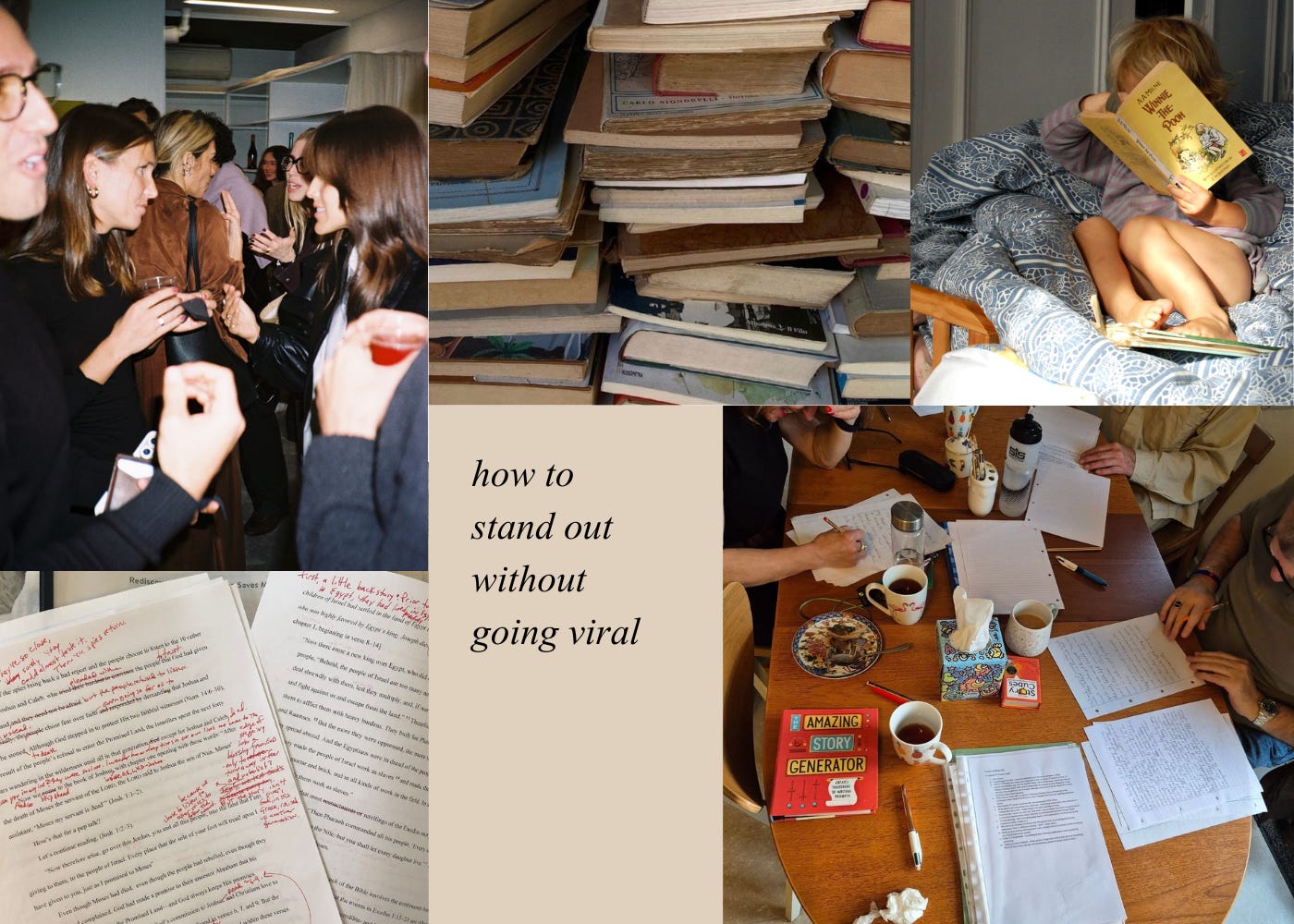
What this looks like across different genres
How you build useful relationships will depend heavily on what you write. Say you wrote a book on investing and your bestie is a cooking influencer with 2M followers—that’s cool, but it probably won’t help you very much.
Nonfiction
If you’re writing an author-driven nonfiction book—such as psychology, business, wellness, politics, science, or even lifestyle genres like cooking and interior design—you likely already exist within some version of that industry.
Maybe you’re a therapist with colleagues who run practices, speak at conferences, or contribute to publications. Maybe you’re in tech and regularly interact with founders, product leads, or newsletter writers. Maybe you’re a professor or researcher with academic and media connections. Or maybe you’re a chef with connections to restaurant groups, food media, or other chefs.
That’s your network.
Bonus: if you’re a journalist writing a book tied to your beat, you’re already sitting on one of the strongest possible networks: other journalists and editors. You know who assigns stories, you know what outlets are interested in your topic, and you understand how to pitch them. That’s a massive advantage (and a PR team’s dream).
Even for narrative nonfiction or memoirs, industry connections apply. If you’re writing a memoir rooted in a specific lived experience (like immigration, recovery, or a particular career path), you may already know community organizers, advocates, writers, or even professionals in adjacent media spaces who care about those same themes.
So instead of thinking, “I don’t have 50k followers,” think, “Who do I already know in the space?” These people don’t need to have followers either, as long as they have gravitas.
But, let’s be honest, if they do have followers, all the better.
Fiction
Fiction is where people tend to feel the most stuck without social media, but there are still plenty of ways in.
Remember this: the writing community itself is a network. To get involved, you could:
Join a consistent critique group
Publish in literary magazines
Connect with readers and local booksellers by attending events like book festivals, bookstore readings, and author panels
Engage in Goodreads communities or niche Discord groups
And eventually:
A critique partner from three years ago might end up being the person who blurbs your debut
A fellow contributor from a literary magazine might later recommend your book to their editor
A bookshop owner you meet at an author event might decide to host your launch
A reviewer whom you interacted with might say yes to reviewing your book down the line
The goal here isn’t to pitch your book idea to everyone you come across, but to meet people who care about the same kinds of books you do. Over time, those relationships will come in handy.
Children’s books
Children’s publishing is probably the clearest example of how different networking can look depending on your genre, because a lot of the most meaningful visibility doesn’t happen online or even in traditional media, but in schools, libraries, and classrooms.
If you’re writing for children or middle-grade readers, your network is often made up of teachers, librarians, and educators who are actively curating what young readers are exposed to.
And unlike other categories of publishing, this is a space where word-of-mouth has a very obvious ripple effect. One librarian recommending a book can turn into a district-wide purchase, or one teacher connecting with a book can mean it becomes part of a yearly curriculum rotation.
And, no, you don’t need a kid to network in these spaces. Many children’s book authors connect with this space through school visits, library events, writing conferences, book festivals, or even through organizations like SCBWI (Society of Children’s Book Writers and Illustrators).
Start networking before you need something
The biggest mistake you can make is waiting to reach out until it’s time to promote your book.
A cold email that essentially says, “Hi, my book is coming out soon, can you share it?” is working uphill from the start. Not because people don’t want to help, but because there’s no context for the relationship yet, and it can feel transactional.
Compare that to something much simpler and months in advance: a short message that says you’ve been following someone’s work, you appreciated a specific piece they wrote or edited or published, you’re working in a similar space, and you’d love to stay in touch. There doesn’t need to be an immediate ask. The goal at this stage is familiarity.
Maintain your network through:
Occasional check-ins
Sharing someone else’s work
Coffee chats and natural conversations
Support when they ask for help
Over time, those small touchpoints add up. You become someone whose name is recognizable and whose work is familiar. Then, when your book does come into the picture, it’s a natural choice for them to say, “Of course, I’d love to share it.”
A final note
Publishing has always been a relationship-driven industry; social media just made one version of those relationships more splashy. There are still plenty of other ways to be known, supported, and recommended that don’t require posting content every day.
If anything, the most sustainable networks tend to be the ones that are built slowly over time. So if social media isn’t your thing, that’s not a disadvantage on its own.
It just means your version of visibility will look different.
Unsolicited Manuscript is an independently run newsletter. All opinions are my own and do not reflect the views of my employer, company, or any other organization.
Read this whole thing and was vigorously nodding my head the whole way thru. This is what authors need to be doing.
Posts like this give me more confidence. It's that non-Substack side of being visible and present I hate, and I love making connections here, hopefully which will lead to possibilities down the line. In fact, I just got a DM from someone who's interested in pooling resources and collaborating, so there you go 🤗