

I Went to the US Book Show and This Is What I Learned
The future of publishing is both dreadfully dire and extremely alive.

If you don’t know what the US Book Show is, I wouldn’t be surprised. It’s a publishing convention held in New York City, but despite being in the literal hub of the industry, it’s only been around for the last five years. Put on by Publishers Weekly (the go-to trade magazine for publishing news), the annual event features a strong mixture of vapid networking, snacks, and advice panels.
Attendance ranged across the board, from traditional publishers (Hachette, Simon & Schuster, and Bloomsbury) to indie publishers, literary agents, and independent authors and contractors.
On the surface, this year’s line-up looked rather positive: celebrating 100 years of the Schomburg Center (NYC’s library-affiliated research center for Black Culture, whoohoo!!), exploring the benefits of BookTok and TikTok shop for sales, and highlighting the growing demand for audiobooks.
About two panels in, things took a turn.
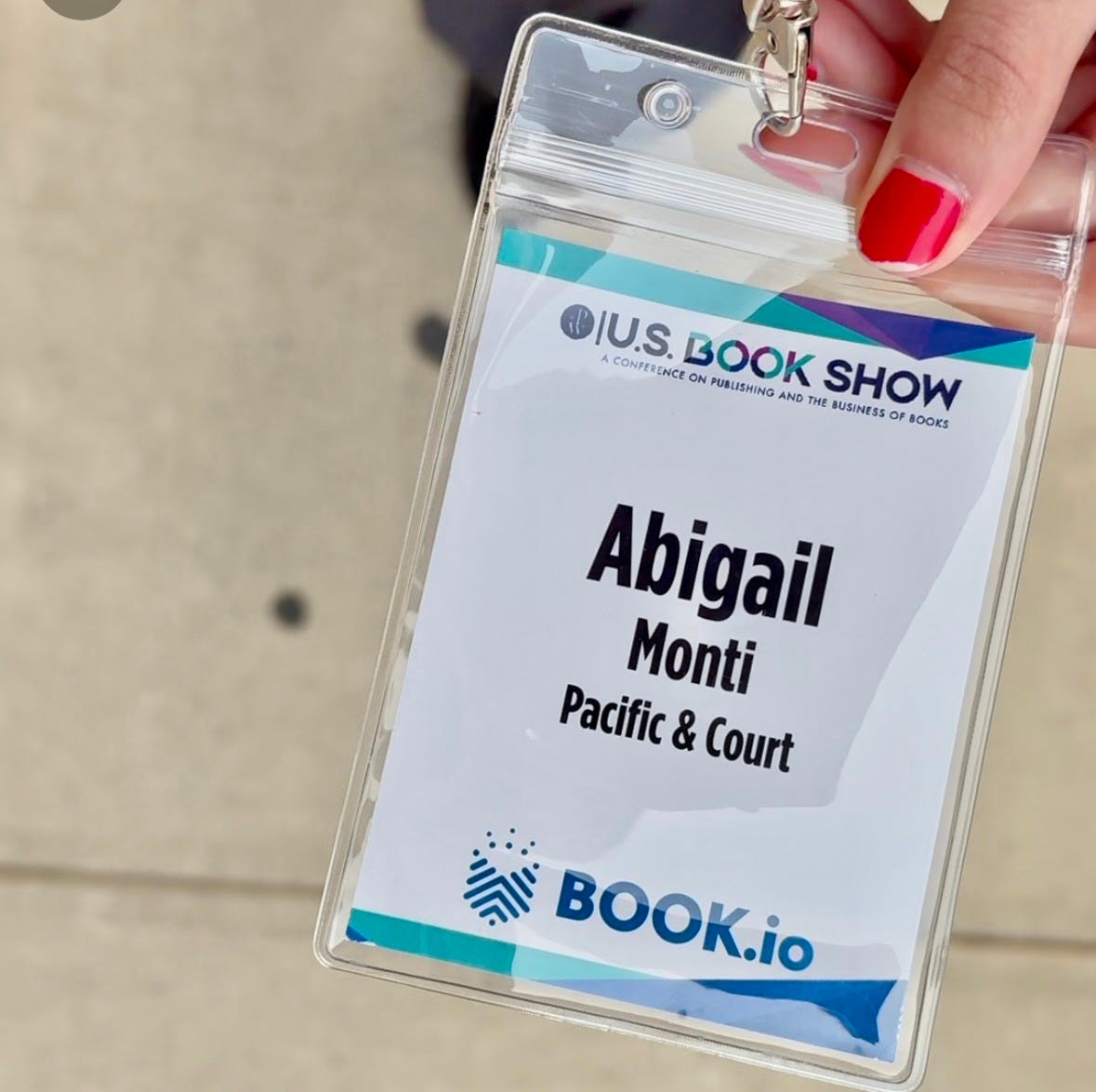
Rather than detail every single panel I attended, let me sum up a few vital (and worrisome) takeaways:
1. Even the people at the forefront of AI integration are scared out of their minds
You know that catchphrase, “AI won’t steal your job, but someone using AI better than you will”? Essentially, that phrase will probably only ring true for the next few years.
AI is vastly applicable to publishing, from generating book outlines and brainstorming titles, to writing SEO-optimized (now GEO) metadata and creating marketing assets. It’s no wonder that every major publishing house is adapting its uses in droves. For now, publishing hasn’t seen major job cuts because of it.
But that’s due to one small reason: the AI we’re using now will be the worst AI we use for the rest of our lives.
Yeah. Let that sink in.
The problem is, there’s no viable alternative. You either integrate AI into your day-to-day or risk falling behind. A few years down the line, however, AI agents will likely account for major portions of publishing workforces.
As a young person in publishing, this isn’t the most encouraging thing I’ve ever heard. But that doesn’t mean I’m going to sit back and watch my career dreams crumble. Like my dad always says, “Hope is not a strategy.”
The best you can do is learn as much as you can about AI as fast as you can. Then put it to work wherever and whenever ethically possible.
Think of it this way: the publishing industry has seen significant growth in the last few years alone (thank you, Covid & TikTok). So while it might seem like AI is sticking its robot fingers into more and more slices of pie, it’s also possible that the pie is simply growing to accommodate them.
2. Literally every industry professional agrees that not enough is being done to support entry-level professionals
If you were an English major (which I’m guessing many of you were), how many of your peers said they wanted to work in publishing? How many of them actually made it into the industry, and how many still work there now?
The numbers aren’t great. The turnover rate is much higher than it should be, especially for POC employees.
But the real reason isn’t the criminal pay or the scarcity of promotions: it’s the lack of mentorship and peer support. Especially for POC employees.
I listened to a panel of six publishing execs go on for an hour about how struggling young employees should seek guidance from higher-ups. Except, that’s the problem: the current industry model expects younger employees to constantly seek out help from mentors who aren’t approachable or lack accessible ways to meet, rather than encouraging senior employees to do a better job meeting entry-level employees where they’re at.
My advice for all the mid- to senior-level publishing professionals out there: go check in on your interns and first-years. Ask them about their hobbies. Tell them about the projects you’re working on, and invite them to take a look. We’ve got thoughts to share; we just want affirmation that you want to hear them. Heck, go above and beyond and schedule recurring meetings with them! Supporting publishing from the ground up will only help the entire industry succeed.
And my advice for entry-level employees: if you aren’t finding the support you need at your company, go join a peer group outside of work. Read this post while you’re at it. It’s a great investment of your time.
3. If you aren’t selling your book on TikTok shop, you’re leaving serious money on the table
TikTok shop is weird. To me, personally, it feels akin to Temu in suspiciousness. And yet, the revenue speaks for itself. If you are an indie author selling exclusively on Amazon, TikTok shop provides an incredible opportunity to diversify your revenue stream.
Gen Z, Gen Alpha, and Millennials are showing a growing preference for online communities that represent extremely niche areas of interest. Like, “how to raise an alpaca, harvest its fur, spin that fur into yarn, and knit your own sweaters” kind of niche. It doesn’t matter if a book on alpaca sweaters came out in 1999 and hardly sold any copies—if that book makes its way into the correct community on TikTok, it could start selling like Colleen Hoover on crack.
There are, unfortunately, two catches to keep in mind:
POD books cannot be sold through TikTok shop. All sold products must ship within two days. This means you’ll need physical copies of your book on hand and be prepared to take them to the post office yourself. (Or, if your publisher is running the show, they can ship straight from the warehouse.)
Listing your book on TikTok shop isn’t enough. There needs to be organic content out there linking to your product. If you’re an introvert author who doesn’t want to show face online—trust me, I get it—send review copies to influencers within your genre in exchange for coverage.
Trust me, these catches are worth it. You can even consider selling signed copies for extra umph.
—
So, there you have it. The publishing industry is an AI- and neglect-fueled hot mess, but it also has an extremely promising future (economically speaking).
If you’re already in the industry, drop a line about whether these takeaways resonate and any advice you have to share. Or, feel free to leave a rant. The best way to navigate change is together.